
Fraud Prevention
How to Recognize Legitimate Fraud Alerts from TopMark Federal Credit Union
Protecting your accounts is a top priority. Here’s how to identify legitimate fraud alerts and avoid scams targeting your debit and credit cards.
Text Fraud Alerts (SMS)
If you receive a text message from TopMark:
- You will be asked to confirm a transaction by replying YES or NO
- Reply YES if you recognize the transaction
- Reply NO if you do not authorize it
If you reply NO:
- Your card will be temporarily locked to prevent additional unauthorized activity
- You may receive a follow-up message (no response required unless you choose to opt out)
- To replace your card, contact TopMark directly
(Fraud staff cannot issue replacement cards)
Fraud Alerts via Phone Call
If you receive a call about suspected fraud on your debit or credit card:
You may be asked to verify your identity using:
- Last 4 digits of your Social Security number
- Date of birth
- ZIP code
Never provide:
- Full Social Security number
- Full card number
- Full account number
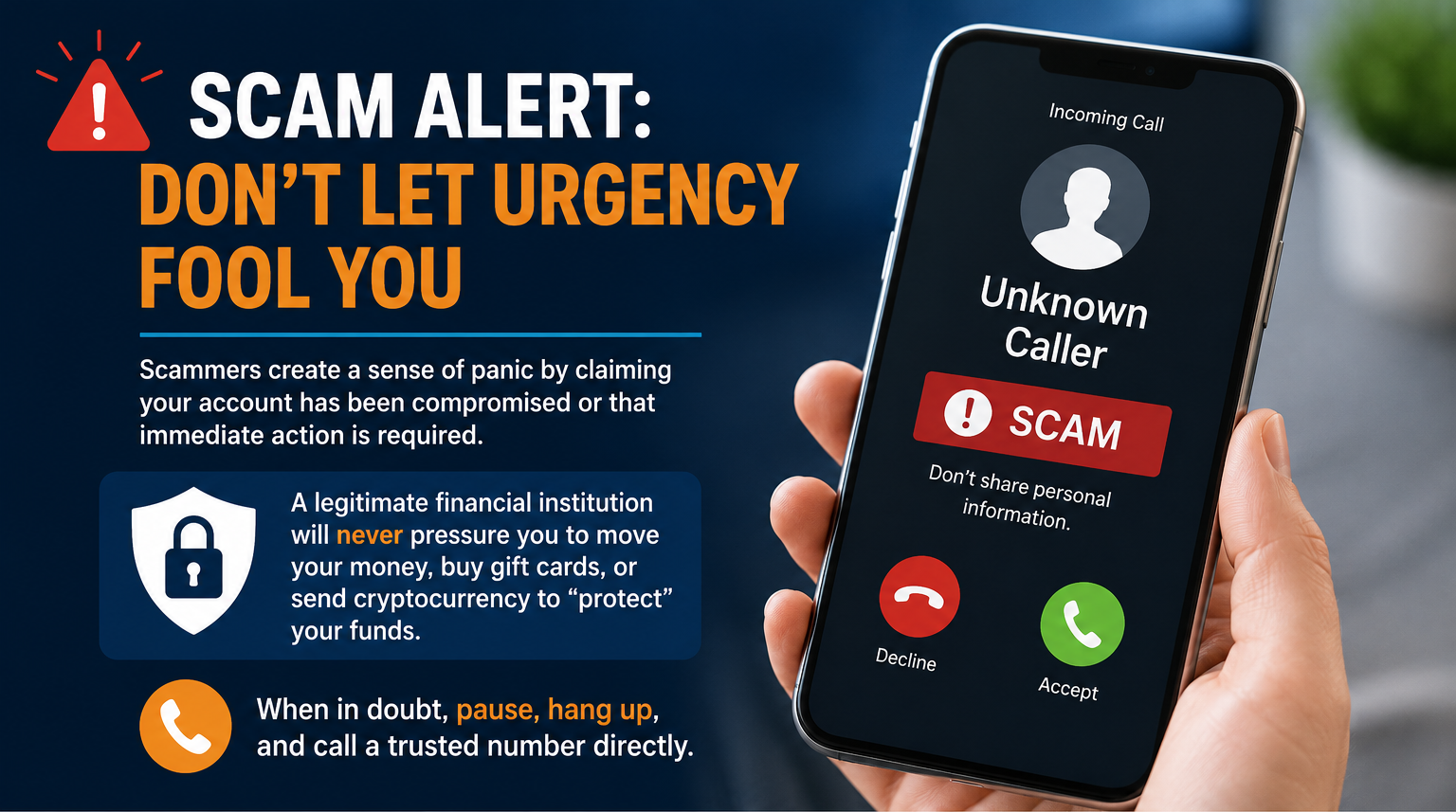
If anything feels suspicious, hang up and call TopMark using a known, trusted number.
Why We Ask Questions—Because Protecting You Matters
Have you ever wondered why our team asks a few extra questions when you're making a large withdrawal, purchasing gift cards, or sending money? The answer is simple: we're looking out for you.
Financial scams are becoming more sophisticated every day. Fraudsters are convincing, patient, and skilled at creating situations that make people feel pressured to act quickly. They often impersonate family members, government agencies, businesses, or even law enforcement in an attempt to steal your money.
That's why, at TopMark Federal Credit Union, our employees may ask questions like:
- "Can you tell me what this money is for?"
- "Has someone instructed you to withdraw cash or purchase gift cards?"
- "Have you met this person in real life?"
- "Did someone tell you not to talk to your financial institution?"
We understand these questions may sometimes feel personal or inconvenient, but they are never asked to invade your privacy. They are asked because we care about your financial well-being and want to help protect you from becoming the next victim of fraud.
Our team receives ongoing training to recognize the warning signs of scams, and sometimes a brief conversation is all it takes to stop a criminal before money is lost.
If something doesn't seem right, we'll always take the time to talk with you. We'd much rather ask a few extra questions today than help you recover from a devastating loss tomorrow.
Thank you for trusting TopMark Federal Credit Union. Protecting your money isn't just part of our job; it's part of our commitment to our members.
Protect Yourself from Fake Shipping Notifications
Scammers often send fake delivery messages by text or email, claiming:
- Missed deliveries
- Package issues
- Requests to update shipping details
Protect yourself:
- Do not click on unknown links
- Verify directly with the shipping company using official contact information
- Avoid entering personal or financial information from unsolicited messages
Beware of Spoofing
Spoofing occurs when scammers disguise their phone numbers or email addresses to appear legitimate.
They may:
- Pretend to be your financial institution or a trusted company
- Request sensitive information such as passwords or verification codes
How to stay safe:
- Never share personal information via text or email unless you independently verify the sender
- Contact the organization directly using official phone numbers or websites
- Be cautious of urgent or high-pressure requests
Common Scammer Tactics
Be alert for:
- Fake emergencies designed to create panic
- “Too good to be true” rewards or offers
- Pressure to act immediately
- Requests to keep information secret
- Threats involving law enforcement or media exposure
Smishing (Text Message Scams)
Smishing is fraud conducted through text messages impersonating trusted brands.
Never:
- Click unknown links in unsolicited texts
- Share personal or financial information via text
If you receive a suspicious message, forward it to 7726 (SPAM).
What Scammers Want
Scammers typically try to:
- Steal personal and financial information
- Install malware on your device
- Trick you into sending money or sensitive data
______________________________________________________________________
What to Do if Your Identity is Stolen
The Federal Trade Commission, spam@uce.gov
The company that the email reportedly came from may have a “to report abuse” email address.
Just remember to include the entire original email with its original header information when you forward it to the FTC or other entity when reporting phishing.
For more information on scams, visit the FBI’s website,
http://www.fbi.gov/scams-safety/fraud/fraud, or the NCUA’s website, http://ncua.gov/Resources/FraudAlert/index.aspx.
________________________________________________________________